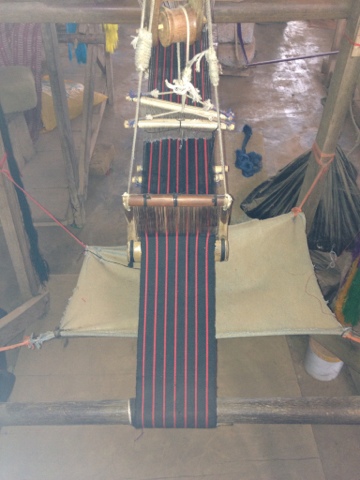
As some of you may know, the aim of mefie.co.uk is to be a social enterprise investing in both the local textile trade as well as young people in Ghana. As we grow the intention is to look at scaling our organisation both in Ghana and to expand to other African nations with the vision that our goods will be sold both on the continent and around the world!
For my final post while in Canada, I had a chance to speak to Denise Brennan who has worked for various NGOs worldwide and who currently works in Social Innovation at the Ontario Centres of Excellence. Her remit is to build partnerships between not-for profits, social enterprises and private companies, hence, she has great insight into the operations of all three types of business. I thought that this was the perfect opportunity to talk about the idea of a social enterprise, to provide a bit more depth as to what we at mefie.co.uk are trying to accomplish and to highlight some of the great enterprises that have come before!
Over the past few months as I have begun the journey of creating my business, one main goal that I have always kept in the fore is my desire to affect change in a positive way and to use the business to further drive/develop African economies...I want to start in Ghana due to my links to the country and then look to expand. There are various types of businesses that can be created in order to aid in growth in Ghana (or any other country). Beyond the traditional for-profit models, there are:
- Social Purpose Businesses - which are for-profit businesses that have a social mission;
- Non-profit Organisations - where the intention and mission is to help a specific cause without a need to create profit or;
- Social Enterprise - which has a social mission which is central to the business and works to a triple bottom line driving growth in people, profit and the environment
(Below is a link to the CSEF which supports social entrepreneurs in Canada. I think it is a great resource for my Canadian peeps)! http://www.csef.ca/what_is_a_social_entrepreneur.php)
Although all three have their merits, for me the only choice was to begin a social enterprise, which has a central focus to impact change. Overall, the concept of a social enterprise is relatively new yet as the idea has gained momentum, there are many outstanding examples both in Fashion and Textiles and in other walks of life that are trailblazers in this area.
Social Entrepreneurs, like myself have the same desire to start a business but also want to be a force for positive social change. Personally, I remember when I read the '7 Habits of Highly Successful People;' there is a chapter in the book where readers are asked to write about how we would want to be remembered when we die. The follow on to that, is an exercise where readers are supposed to list whether the activities in our life align to the legacy that we want to create. For me, personally...having worked in Pharmaceuticals for a number of years...there was a serious disconnect...so in starting this business I feel that the connection between my desire to affect change in a positive way is achieved. For me, running a for-profit business but using it in a way that would leave a lasting legacy is important.
Based on my discussions with Denise, and my own personal experience, there are a few common issues which arise for social entrepreneurs:
- how do you make money from it;
- how do you get investment;
- how do you register the business and;
- what resources are available to support this type of business?
As a business, like any other, social enterprises need to implement a sound business model in order to create growth. Like any other, the key is to have a good idea and to drive growth and adoption in the same way that a normal business would do. The main differences however are operational ie. the investment will not just go into the pocket of the owner/shareholder but also be re-invested in the environment and people and the social impact will remain at the forefront of the business.
Social Enterprises are a newer concept and as such obtaining investment can be tricky. However, there are different options available which can aid in gaining the funding needed to make the venture a success. There are Social Impact Investors whose aim is to invest with a conscience with the knowledge that the business will not only look to drive profit. As well there are a number of crowd-funding sites where you can pitch a business idea to the masses (generally via the Internet) and investors can read your business plan, mission and vision in order to decide whether they believe in your business and whether they would like to invest in the concept. Both of the above options provide new means of growth and investment which allow a social enterprise not to be constrained by the traditional confines of just profit.
As this new(ish) form of enterprise continues to grow it will be interesting to see how the business environment begins to shift and the impact that social enterprise has on a grander scale. Additionally, with the advent of the internet, there is greater social awareness and as a result people have begun to question what their legacy is and what they can do to affect change. Based on Denises' experience thus far, many young people are very engaged and there are new organisations etc geared towards supporting young social entrepreneurs. Hence these are exciting times...hopefully for the next generation, the idea of social entrepreneurship will be the norm and all companies will feel that they need to contribute to the wider society of which they are a part.
As a final hurrah - here are two social ventures started in Canada: -
- St Johns Bakery - which helps marginalised individuals get off of welfare and to contribute to society by providing employment
- My Voice Inc - has developed a smart phone application with words available for those with communication issues ie. after a stroke, autism etc.
...and across the African continent here are a few more ventures that I wanted to celebrate!
- The Edun Project - started and run by Bono and his wife -- its mission is to bring about change through a positive trading relationship with Africa..currently about 40% of their goods are produced in Africa but the plan is to increase the uptake by 10% per year...based on their talk at the International Herald Tribune Conference (IHT) focused on growth and development in Africa, in November 2012, they have also secured funding from the Louis Vuitton Group
- www.Maiyet.com - which is a fashion line/social enterprise which works in developing countries to manufacture and create their line. The intention is to increase peace around the world through growth and investment
- www.choolips.co.uk - which is a fashion brand in the UK which works with artisans and seamstresses in Ghana, India and Kenya in order to further develop the trade and produce apparel
I look forward to continuing the conversation and look forward to greater development as a social entrepreneur!
...and goodbye TO--it has been fun...love ya lots
xx mefie uk